In This Guide
- The Real Answer (No Hedging)
- What the Research Actually Says
- The Two Points Where LDRs Break
- The One Thing That Predicts Survival
- What Actually Works (And What Doesn't)
- The Part Nobody Wants to Talk About
- How to Know If Yours Will Last
- The Five Phases of an LDR
- The Money Reality
- The Visit Problem
- Red Flags vs Normal Phases
- Closing the Distance
- Communication That Works
- Trust & Jealousy
- The Time Zone Problem
- Dating vs Engaged vs Married
- The Friends & Family Problem
- What the Research Misses
- The Short Version
- Frequently Asked Questions
The Real Answer (No Hedging)
A long-distance relationship can last indefinitely. That is the literal answer, and it is useless on its own — so here is the useful version: the length of a long-distance relationship is not determined by the distance. It is determined by whether both people are moving toward the same ending.
I run this site from Stockholm. My partner is in Australia. That is roughly 15,000 km and eight to ten time zones depending on the season, and we have been doing it for over two years. I did not plan to become someone with opinions about long-distance relationships. I just kept looking for honest information and kept finding the same recycled listicles telling me to "schedule virtual date nights" and "send good morning texts."
So this is the article I wanted when I started: what the research actually says, where couples actually break, and the difference between a relationship that is long-distance and one that is quietly ending.
What the Research Actually Says
Be careful with LDR statistics. They get repeated confidently across the internet with wildly different numbers, often traced back to small studies of college students — a population where relationships end frequently regardless of distance.
The figures most commonly cited suggest that around 58–60% of long-distance relationships succeed, while other research reports failure rates near 40%. Notably, several studies find long-distance couples break up at rates similar to geographically close couples — and some report higher relationship satisfaction and more meaningful communication among LDR couples.
The honest conclusion is not "LDRs work" or "LDRs fail." It is that distance is a much weaker predictor than people assume. The stronger predictors are structural.
The Two Points Where LDRs Break
Research on long-distance breakups keeps surfacing two vulnerable windows. If you are in one, it helps enormously to know it is a known phase and not a verdict on your relationship.
Around 3 months: the novelty ends
The first stretch often runs on adrenaline. There is a countdown to the next visit, the messages feel urgent, the whole thing has a slightly cinematic quality. Around three months it stops being an event and becomes a routine — and the routine involves a lot of ordinary evenings alone. Couples who expect this transition handle it far better than couples who read it as falling out of love.
Around 8 months: the plan gets tested
The second window is where open-ended arrangements collapse. By this point "we'll figure it out" has stopped being reassuring. With no concrete plan for closing the distance, the relationship starts to feel like it has no destination — and people rarely stay on a road with no destination indefinitely.
The One Thing That Predicts Survival
If you take one thing from this article: couples with a plan to eventually live in the same place do dramatically better than couples without one. This is the most consistent finding across long-distance relationship research, and it matches everything I have seen in LDR communities.
The plan does not have to be soon, or even precise. It has to be shared and real — "after her degree finishes" or "once the visa clears" rather than "someday." An end date turns waiting into progress. Without one, every difficult week is evidence that this might just be your life now.
💡 The conversation most couples avoid
Setting an end date is uncomfortable because it forces both people to say what they actually want. That is exactly why it predicts survival. If you have been together months without agreeing on what you are waiting for, that conversation is more urgent than any communication tip.
What Actually Works (And What Doesn't)
Predictability beats frequency
Visiting every three months on a known schedule is easier to live with than visiting more often but never knowing when. The same applies to calls. A reliable rhythm reduces the low-level anxiety that erodes long-distance relationships more than any single argument does.
Shared activity beats constant texting
Research on LDR communication consistently finds quality matters more than volume. Watching the same thing at the same time, playing something together, cooking the same meal on a video call — these produce a sense of shared life that a hundred low-content messages do not. Constant texting can even become a burden across incompatible time zones.
Time zones need a system, not willpower
With eight-plus hours of difference, someone is always compromising sleep. Couples who survive this stop treating it as a nightly negotiation and build a default: fixed windows that work for both, and explicit permission to skip a call without it meaning anything.
What doesn't work
Monitoring each other's activity. Treating every missed call as a signal. Pretending the difficult parts are fine. And — the one nobody says out loud — letting the physical side quietly disappear until it becomes awkward to bring up.
The Part Nobody Wants to Talk About
Most long-distance advice stops politely before this point, which is strange, because physical intimacy is one of the things distance actually removes. Ignoring it does not make it neutral — it usually becomes a slow drift where both people feel less like partners and more like very close friends who occasionally book flights.
This is genuinely why this site exists. When I went long-distance I started looking into app-controlled toys — devices one partner can control remotely over the internet — and found almost every review was either a rewritten press release or too coy to answer basic questions. So I started writing the reviews I wanted to read.
Two setups come up again and again for couples separated by real distance. Short version here; the full reviews cover battery life, latency, noise and the things that actually matter day to day.

Lovense Lush 4
- Wearable — works while you go about your day
- Controlled by your partner from anywhere with internet
- Long battery life for unpredictable time zones
- The most common starting point for LDR couples

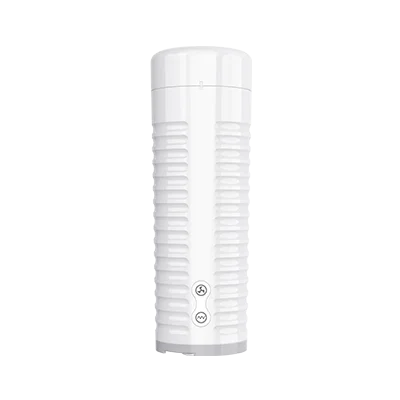
Nora + Max 2
- The two devices sync to each other, both directions
- One partner's movement drives the other's device
- Built for couples rather than solo use
- The closest thing to a shared physical experience at distance
If you want the wider comparison rather than my two picks: the long-distance setup guide, the best options for couples, remote-control toys tested for long-distance use, and the Ferri or Lush 3 reviews if budget or discretion is your priority. If none of this is relevant to you, the rest of the article stands on its own.
The broader point is not about devices. Couples who talk openly about this part — including when it is not going well — tend to stay couples. The ones who let it become unmentionable tend not to.
How to Know If Yours Will Last
There is no test that returns a percentage. But based on the research and a lot of time in long-distance communities, these are the questions that actually discriminate between relationships that make it and relationships that are ending slowly:
- Do you both know what you are waiting for? Not the exact date — the condition. If you would answer differently from each other, address that first.
- Is one person carrying the logistics? Booking every flight, initiating every call, remembering every time difference. Long-distance survives on symmetry; asymmetry compounds.
- Can you be bored together? Relationships that only exist at high emotional intensity struggle across distance. Sharing an unremarkable evening on a call is a better sign than a dramatic reunion.
- Are you both still building a life where you are? Putting your own life on pause "until we're together" creates a resentment that outlasts the distance.
- Do difficult conversations happen, or get postponed to the next visit? Saving conflict for the two weeks you are physically together poisons the only time you have.
If most of these land well, the distance is a logistics problem — expensive and tiring, but logistics. If most do not, the distance probably is not the actual issue, and closing it would not fix things.
That is the honest answer to how long a long-distance relationship can last: exactly as long as both people are still walking toward the same place. Ours is still going. Yours might well outlast the distance too.
The Five Phases Almost Every LDR Goes Through
Long-distance relationships are unusually predictable in shape. Knowing the phases in advance is protective, because most of the panic in an LDR comes from mistaking a normal stage for a terminal problem.
Phase 1 — The adrenaline stretch (weeks 1–8)
Higher contact than when you lived nearby, a countdown to the first visit, a slightly cinematic quality to everything. Couples often report this period as intense and surprisingly good. It is also the least representative of what the relationship will actually be.
Phase 2 — The flattening (around month 3)
The novelty ends. Calls start to feel like an item on a list rather than an event. This is the first documented vulnerability window, and it is where couples most commonly misread the situation as falling out of love. It is not. It is the relationship becoming ordinary — which is what all relationships do, only here it is more noticeable because the ordinary version has no physical component.
Phase 3 — The plan test (around month 8)
"We'll figure it out" stops being reassuring. If there is no concrete condition for closing the distance, this is where momentum decays. Couples with a shared endpoint tend to pass through this phase barely noticing it; couples without one often end here without ever having a decisive argument.
Phase 4 — Operational stability (year 1–2)
If you make it past the plan test, something genuinely changes. The logistics become habit, the visits have a rhythm, and the relationship stops being an ongoing crisis to manage. Many couples report this phase as easier than the early months, which surprises people who assume it only gets harder.
Phase 5 — The endgame
Either the distance closes, or the plan slips repeatedly and the relationship has to be re-decided. Both are survivable. What is not survivable is an indefinite Phase 4 with no Phase 5 in sight — that is the state in which resentment accumulates fastest.
The Money Reality Nobody Budgets For
Almost no long-distance advice covers cost honestly, which is strange, because money decides how often you see each other and therefore shapes the whole relationship.
The real budget is not just flights. It is flights plus time off work plus accommodation if you cannot stay with them plus the smaller ongoing costs — international calling backups when the internet fails, shipping things to each other, the occasional emergency ticket. For intercontinental couples the annual cost is often equivalent to a significant holiday budget, repeated several times a year.
Decide the cadence before you decide the romance
Work out what you can genuinely afford per year, then divide it into visits. A couple who can afford three visits a year and plans three visits a year is in a far better position than a couple who plans six, manages two, and experiences the other four as failures.
Split it explicitly
If one person earns more, or one country is cheaper to fly from, the cost lands unevenly by default. Couples who never discuss this tend to develop a quiet ledger — one person feeling they pay more, the other feeling they travel more. Naming the split early prevents an entire category of resentment.
💡 The booking rule that changes everything
Book the next visit before the current one ends. It is the single cheapest intervention in long-distance: it converts an open-ended absence into a defined wait, and the research on predictability suggests that is worth more than an extra visit you never quite schedule.
The Visit Problem (Yes, Visits Have Problems)
Visits are the thing everyone looks forward to and almost nobody prepares for. Two failure modes recur.
The pressure to make it perfect
When you only have ten days together, there is an instinct to make every hour meaningful. This produces stress, not closeness, and it turns any ordinary disagreement into a crisis because it is "wasting" limited time. The couples who handle visits best deliberately schedule boring time — an evening in, a supermarket run, a morning where nothing is planned. That is what living together actually feels like, and it is more informative about your compatibility than a packed itinerary.
Saving conflict for the visit
If difficult conversations get postponed to the two weeks you are physically together, you are systematically poisoning the only good time you have. Have the hard conversations on video calls, in the ordinary weeks. Use the visit for the things you can only do in person.
The post-visit crash
The days after a visit are usually worse than the ordinary weeks. This is well known in LDR communities and it catches people off guard every single time. Plan something for the 48 hours after you separate — work, friends, anything with structure. It does not fix the feeling, but it stops the empty days from becoming a referendum on the relationship.
Red Flags vs Normal Phases
The hardest judgement in a long-distance relationship is telling the difference between a phase and a problem. Here is the honest split, based on the patterns that recur across research and in LDR communities.
Normal, even if it feels bad
- The month-three flattening. Documented, extremely common, not a verdict.
- Feeling worse immediately after a visit.
- Occasional relief when a call gets cancelled. Being tired is not being disinterested.
- Having less to say than you expected. Two lives that no longer overlap produce fewer shared reference points; that is logistics, not distance of feeling.
Actual red flags
- Neither of you can name what you are waiting for. The single strongest predictor of failure in the research.
- Monitoring behaviour. Checking activity status, reading into response times, requiring proof of location. It never produces reassurance and it escalates.
- One person's life is on hold. Turning down opportunities, not building friendships, treating their current city as a waiting room.
- The plan keeps slipping without discussion. A date moving once is life. A date moving three times without either of you naming it is a decision being made by default.
- Contact only happens when one person initiates. Asymmetry in effort compounds faster at distance than it does in the same city.
The distinction matters because couples routinely end relationships during a normal phase, and equally routinely tolerate a genuine red flag for years by calling it a phase.
Closing the Distance: What Actually Happens
Almost no article covers this part, and it is the part every long-distance couple is aiming at. Closing the distance is not the end of the difficulty; it is a different difficulty, and couples who expect a clean landing are often thrown by it.
The common experience is that the first months living in the same city are harder than expected. You have spent months or years optimising for scarcity — every conversation mattered, every visit was concentrated. Ordinary cohabitation, with its unremarkable evenings and logistical friction, can initially feel like a downgrade. It is not. It is the thing you were working toward, minus the intensity that scarcity manufactured.
The couples who handle this best tend to have talked about it in advance: who is moving, what that person is giving up, how the non-moving partner will make room. The person who relocates typically loses their support network, and that loss is real and rarely budgeted for emotionally.
It is worth saying plainly: making it to the end of the distance is a genuine achievement. Most long-distance couples who reach that point report it was worth the years of logistics. But it is a transition, not a finish line.
Communication: What Actually Works at Distance
The default advice is "communicate more." The research points somewhere more specific: communication quality and shared activity predict closeness far better than message volume does. Couples who text constantly but never do anything together often report feeling less connected than couples who speak less but share experiences.
Do things, don't just report things
The most common failure is that calls become status updates — what you did, what you ate, who annoyed you. Useful, but it is reporting, not sharing. Watching the same film simultaneously, playing something together, reading the same book, cooking the same meal on a call: these create shared reference points, which is what couples in the same city accumulate automatically without noticing.
One good conversation beats forty fragments
Constant low-content messaging fragments attention and, across bad time zones, becomes an obligation. A single unhurried conversation where both of you are actually present is worth more than a day of pings. Some couples explicitly protect one longer call a week and let the rest be casual.
Say the boring things
Because contact is limited, there is a temptation to only report headlines. But intimacy is built out of trivia — the annoying colleague, the broken washing machine, what you thought about on the walk home. Couples who only exchange significant news slowly become well-informed strangers.
Video is not always better
Video calls demand full attention and can feel like performance when you are exhausted. Voice calls while doing something else — walking, cooking, tidying — often produce more relaxed conversation. Vary the format rather than treating video as the gold standard.
Trust, Jealousy and the Things You Cannot See
Distance removes the ambient reassurance that same-city couples get for free. You do not see who they had lunch with, you do not meet their new colleagues, and your brain fills the gaps — usually badly, and usually late at night.
Anxiety is normal; surveillance is not
Feeling insecure occasionally is close to universal in long-distance relationships. Acting on it by monitoring is the thing that actually damages relationships. Checking activity status, timing responses, requesting location proof — none of it produces lasting reassurance, and all of it escalates, because the underlying anxiety is not about information.
Integrate their world, remotely
The strongest antidote to the unknown is familiarity. Meet their friends on a call. Know the names of their colleagues. Understand the layout of their flat. Couples who do this report far less background anxiety than couples whose partner's daily life is an abstraction.
Agree what you will disclose
Not rules — expectations. Whether nights out get mentioned, whether new friendships get mentioned, what counts as something the other would want to know. Ambiguity is what generates suspicion; explicit expectations remove most of it without policing anybody.
💡 The 24-hour rule for anxious thoughts
If a worry arrives at 1am, do not send it at 1am. Write it down and see whether it still seems real the next day. A large proportion of long-distance conflict is generated by tired brains filling informational gaps, and most of it dissolves by morning.
The Time Zone Problem, Solved Properly
A two-hour difference is an inconvenience. Eight or more is a structural constraint that shapes the entire relationship, and it deserves more than "find a time that works."
Someone always pays
With a large gap there is no overlap where both people are at their best. One of you is always calling early or staying up late. The couples who handle it well acknowledge this openly and alternate the cost rather than defaulting to whoever complains least.
Build fixed windows, not daily negotiation
Deciding when to talk every single day is exhausting and generates friction. Fix two or three recurring windows that work reasonably for both, and treat everything else as bonus. Predictability is the thing that reduces anxiety — the research on this is consistent.
Asynchronous communication is underrated
Voice notes, long messages, photos sent through the day — these let you share life without both being awake. Many long-distance couples find that a steady asynchronous stream plus two proper calls a week feels closer than forcing daily live contact at bad hours.
Protect sleep
Chronic sleep deprivation makes everything about the relationship harder — patience, perspective, intimacy. Couples who consistently sacrifice sleep for calls tend to become worse partners to each other, not better ones. Explicit permission to skip is not a lack of commitment; it is maintenance.
Does It Depend on the Stage? Dating vs Engaged vs Married
Almost all long-distance advice treats "long-distance relationship" as one thing. In practice the stage you are at changes the odds substantially, because it changes what you are waiting for and how much structure already exists.
Early dating at distance
The hardest version, and the one most likely to end — not because the feelings are weaker, but because there is no accumulated foundation and no obvious endpoint. Couples who become long-distance within the first few months are essentially trying to build a relationship and survive distance simultaneously. It happens successfully all the time, but it demands the "what are we waiting for" conversation much earlier than feels natural.
An established couple that becomes long-distance
Statistically the most survivable version. You already know how the other person handles stress, you have shared history to draw on, and the separation usually has a cause with a natural end — a job, a degree, a visa process. The risk here is complacency: assuming the existing foundation makes the logistics unnecessary. It does not. Established couples who skip the rhythm, the booked visits and the money conversation hit the same eight-month wall as everyone else.
Engaged or married at distance
Here the endpoint is not in question, which removes the single biggest failure mode. What replaces it is a different strain: the gap between the commitment you have made and the daily life you are actually living. Military couples, medical residents and expatriate workers know this version well. The research on it is more favourable than most people expect, largely because the shared plan is already explicit.
With children involved
An entirely different problem, and one where generic advice is close to useless. Scheduling stops being about the two of you and becomes about school terms, custody arrangements and childcare. If this is your situation, the practical constraint is that spontaneity disappears completely — everything has to be planned further ahead than childless couples can imagine.
The Friends and Family Problem
Nobody warns you that a significant part of long-distance is managing other people's opinions about it.
You will be asked to justify it
Repeatedly, often by people who mean well. "Isn't that hard?" "How long can that really go on?" "Don't you want someone here?" Each individual question is harmless; the cumulative effect is a slow pressure to defend a choice you are already uncertain about at 11pm.
The useful response is a short, settled one that closes the topic rather than opening a debate. Couples who try to fully explain and justify the relationship each time end up rehearsing their own doubts out loud, repeatedly.
Your partner stays abstract to the people around you
If your friends and family have never met them, the relationship can feel semi-fictional to everyone but you — which is isolating in a specific and underrated way. Bringing your partner into calls with friends, sharing ordinary photos rather than only milestone ones, and making sure people know their name and job all help. It sounds trivial. It substantially changes how supported you feel.
The visit is not a performance for others
When your partner visits, there is pressure to introduce them to everyone in a fortnight. Resist compressing it. A visit spent entirely on social obligations is a visit you did not spend together, and it converts your limited time into an event for other people.
What the Research Doesn't Capture
It is worth being straight about the limits of the numbers quoted in this article, including my own use of them.
Most studies sample students. University populations are convenient to research and unrepresentative in exactly the ways that matter here — age, relationship duration, financial independence, and life stability. A 58% success figure derived from undergraduates tells you relatively little about a thirty-five-year-old couple separated by a work posting.
"Success" is defined inconsistently. Some studies count a relationship as successful if it survives the study period. Others count reunification. Others measure satisfaction rather than survival. These produce very different numbers from the same underlying reality, which is a large part of why quoted statistics vary so wildly.
Survivorship bias runs through the anecdotes. The couples who write about long-distance online are disproportionately the ones it worked for. The ones who quietly ended it after five months are not writing guides. That includes me: my perspective comes from a relationship that is still going, which is a specific and non-neutral vantage point.
Almost nothing measures the ending well. There is far more research on whether long-distance relationships survive than on whether the people in them were happy, or whether ending one was the right decision. A relationship that ends is not automatically a failure, and the literature is not well set up to say so.
None of this means the patterns are useless. The two vulnerability windows and the end-date finding show up consistently enough across different populations to be worth planning around. But treat any single confident percentage — including the ones above — as an indication rather than a measurement.
The Short Version
If you read nothing else: a long-distance relationship lasts as long as both people are moving toward the same ending. Distance is a logistics problem. The absence of a shared destination is the actual failure mode, and it is the one thing the research keeps confirming across otherwise inconsistent studies.
Everything else is management. Book the next visit before the current absence begins. Choose a calling rhythm you could keep during your worst week rather than your best. Do things together rather than reporting to each other. Split the money explicitly. Protect your own life where you are. Expect the month-three flattening and the month-eight plan test, and do not mistake either for a verdict.
And talk about the physical side before it becomes unmentionable — that one is not optional, and it is the failure mode nobody writes about.
Frequently Asked Questions
🔍 A note on the numbers in this article
The survival-rate figures and breakup-window patterns above come from published long-distance relationship research as reported across the field — they are ranges, not precise measurements, and different studies disagree. I've presented them as ranges for that reason rather than picking the most quotable number. The lived perspective is my own: Stockholm to Australia, two years and counting. Where I'm describing research versus my own experience, I've said which.
🔗 Where to go next
If you are at the very start of this, read what nobody tells you before month one. If your partner has just left, the first 30 days covers the hardest stretch. And for the practical side of intimacy at distance, the long-distance setup guide and best options for couples cover what actually works — including the Lush 4, the Nora and Max 2 sync pair, and the budget-friendly Lush 3.

I started Pleasure Vibe Reviews after going long-distance with my partner — Sweden to Australia, 15,000km apart. I write the honest guides and reviews I couldn't find myself: manufacturer specs, verified buyer data, and my own experience — and I'm always clear about which is which. More about me → · How I Review →
Looking for full side-by-side spec comparisons?