In This Guide
- The Week Before
- The Goodbye, and the Week After
- Weeks Two to Four: Build the Structure
- What Makes the First Month Worse
- After Thirty Days
- The Week-Before Checklist
- The Empty Space
- The First Call
- Supporting Them
- The Physical Absence
- Why They're Moving Matters
- Week One, Realistically
- Rebuilding Your Week
- What Month Two Looks Like
- Telling Friends & Family
- The Visit Calendar
- When They Enjoy Their New City
- If You're Struggling
- Frequently Asked Questions
The Week Before
The week before a partner moves is strange. There is a pull to make every moment significant, which usually produces pressure rather than closeness — and a fair number of arguments that are really about the leaving.
Two things are worth doing in that week, and neither is romantic:
- Have the "what are we waiting for" conversation in person. Not a date necessarily — a condition. Research on long-distance relationships consistently finds that couples with a shared plan to eventually be in the same place do dramatically better than couples with an open-ended arrangement. This conversation is much easier face to face than over a video call three weeks later.
- Book the next visit if you possibly can. Having a confirmed date changes how the first month feels more than almost anything else.
What is not worth doing: trying to compress months of connection into seven days. It rarely works and it makes the goodbye heavier.
The Goodbye, and the Week After
The goodbye is usually worse than people prepare for, and the days immediately after are strange rather than sad — a sort of flatness where the person is simply not there in the way they were.
Expect the first week to be disorienting. Expect to handle it worse than you think you should. It is not a signal about the relationship's strength; it is the normal shape of a sudden absence.
💡 Do not renegotiate the relationship in week one
The first week is the worst possible time to decide anything — whether to stay together, whether to follow them, whether it is worth it. Give it a month before any of those conversations count as real.
Weeks Two to Four: Build the Structure
This is where the habits that determine the next year get set. Three things matter most:
A rhythm you can keep on a bad week
Not the most ambitious schedule you can manage in week two — the one you can still keep in month four when work is heavy. Give each other explicit permission to skip a call without it meaning anything. Predictability reduces anxiety far more than volume does.
Shared activity, not just status updates
Research on long-distance communication consistently finds that quality and shared activity beat message volume. Watching something at the same time, playing something together, having one proper conversation instead of forty fragments — that builds a sense of shared life. Constant low-content texting does not, and across time zones it can become a burden.
Rebuild your own week
The strongest thing you can do for the relationship in month one is to have a life that is not organised entirely around the next call. Couples where one person puts everything on pause accumulate a resentment that outlasts the distance itself.
What Makes the First Month Worse
- Talking constantly out of anxiety. It feels like closeness and functions like monitoring. It also sets a pace neither of you can sustain.
- Reading into response times. The most reliable way to manufacture a problem that did not exist.
- Saving everything difficult for the next visit. If conflict is postponed to the two weeks you are together, you poison the only time you have.
- Pretending you are fine. The unsaid things accumulate faster than people expect.
- Letting the physical side quietly disappear. Nobody wants to raise it in month one, so it becomes unmentionable by month four. Agreeing early that it is discussable is worth more than any solution.
On that last point: when you want the practical version rather than the principle, the guides are here — the long-distance setup guide, the best options for couples, and the two usual starting points, the wearable Lush 4 and the Nora + Max 2 pair that sync to each other.
After Thirty Days
If you get through the first month with a rhythm, a booked visit and an honest sense of what you are both waiting for, you have built the structure that most long-distance couples never get around to building.
What comes next is the three-month dip, when novelty ends and this becomes ordinary life. That is a documented phase and not a verdict — the longer piece on how long an LDR can actually last covers what happens after, and the guide to starting out covers the decisions worth making early.
The first thirty days are the hardest stretch you will do without a plan. After that, you have one.
The Practical Checklist for the Week Before
The week before someone moves is usually spent on emotion and packing, and almost never on the logistics that determine the next six months. These are worth an hour of your time.
- Agree what you are waiting for. Not a date necessarily — a condition. This is the strongest predictor of long-distance success in the research, and it is dramatically easier to discuss in person than on a video call three weeks later.
- Book the next visit. Not "we'll aim for October." An actual booking. It converts an open-ended absence into a defined wait.
- Work out the money. What you can genuinely afford per year in flights and time off, split explicitly. Uneven cost is one of the most common quiet resentments in long-distance.
- Set the call rhythm. Choose one you could still keep on a terrible week, not the ambitious version.
- Swap the practical details. Their new address, their new routine, their new time zone written down somewhere you will actually look.
What is not worth doing: trying to compress months of connection into the final seven days. It reliably produces pressure and arguments that are really about the leaving.
The Empty Space at Home
Nobody warns you about the physical environment. If they lived with you, the flat changes character. If they did not, the routines you shared — the walk, the coffee place, the Thursday habit — become quietly loaded.
Two things help, and they sound trivial until you try them.
Change something deliberately
Rearrange a room, move furniture, alter your route. Not to erase them — to stop the space from being a constant comparison with how it was two weeks ago.
Reclaim the shared routines on purpose
Go to the coffee place with a friend rather than avoiding it for six months. Avoided places accumulate significance; used ones lose it.
The First Call After They Arrive
The first proper conversation after arrival is often stranger than expected. They are overwhelmed with new information and logistics; you are dealing with an absence. Neither of you is at your best, and both of you have been quietly hoping the call would fix something.
Lower the stakes deliberately. It does not have to be a significant conversation. Let them narrate the boring details — the flat, the commute, the food — because that is how you start building a picture of the life you cannot see, and that picture is what prevents anxiety later.
Do not use the first call to raise a concern about the relationship. Whatever you are feeling on day two is mostly the absence talking.
Supporting Them Without Losing Yourself
There is a common asymmetry in the first month: the person who moved is busy, stimulated and slightly guilty; the person who stayed is lonely and trying not to be a burden. Both roles are uncomfortable and neither is talked about honestly.
Say when you are struggling
Protecting them from your difficulty seems generous. In practice it teaches them that your reports are unreliable, and it means the eventual conversation arrives as a shock rather than a build-up.
Do not make your week revolve around calls
The strongest thing you can do for the relationship in month one is to have a life that is not organised entirely around the next contact. Couples where one person puts everything on hold accumulate a resentment that outlasts the distance.
Let them have a good time
If they are enjoying their new city, that is not a threat. A partner who feels guilty for being happy will eventually start editing what they tell you.
The Physical Absence Nobody Plans For
Almost every guide about a partner moving away stops before this, and it is one of the concrete things that actually changes. Left unaddressed, it becomes unmentionable by month four — which is a much harder problem than raising it in month one.
You do not need a solution immediately. Agreeing that it is a topic you will talk about is the useful part. When you do want the practical version, two setups come up repeatedly for genuinely distant couples.

Lovense Lush 4
- Wearable — works while you go about your day
- Controlled by your partner from anywhere with internet
- Long battery life for unpredictable time zones
- The usual starting point for long-distance couples

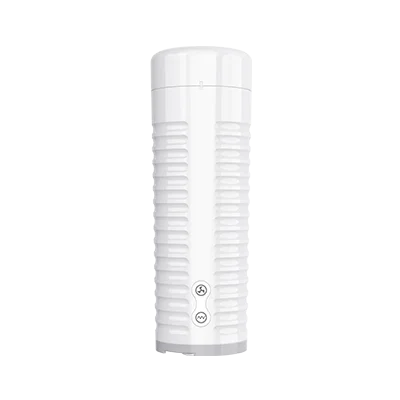
Nora + Max 2
- The two devices sync to each other, both directions
- One partner's movement drives the other's device
- Built for couples rather than solo use
- The closest thing to a shared physical experience
The long-distance setup guide covers connectivity and latency, best options for couples compares the range, and the Lush 3 is the budget entry point if cost is a factor this month.
The Reason They're Moving Changes Everything
Advice about a partner moving away tends to assume a single scenario. In practice the reason for the move determines the emotional shape of the next year more than the distance does.
Work or career relocation
Usually the cleanest version: there is an employer, a contract, and often a defined term. The complication is resentment risk — if one person's career dictated the move, the other can feel their life was treated as portable. Naming that early, out loud, prevents it from surfacing eighteen months later during an unrelated argument.
Study
A clear end date, which is a genuine advantage, but often years away. The person studying changes rapidly; the person staying often does not. That asymmetry, not the distance, generates most of the friction.
Family obligation
A sick parent, a family business, immigration paperwork. The hardest version emotionally, because the end date is genuinely unknowable and nobody can be blamed for it. Couples in this situation benefit from reviewing the plan on a schedule — every three months, deliberately — rather than waiting for clarity that may not arrive.
Military deployment or similar
Distinct from all of the above: contact may be restricted, unpredictable and outside either person's control. Ordinary long-distance advice about communication rhythm partially breaks down here. What matters more is asynchronous connection and a very explicit shared understanding of what silence does and does not mean.
Trial separation dressed as a move
Worth naming, because it happens. Sometimes a relocation is genuinely logistical, and sometimes it is a way of ending a relationship slowly without either person saying so. If you recognise your situation here, the distance is not the problem to solve.
Week One, Realistically
Most guides skip straight from the goodbye to "tips for staying connected." The first week deserves its own description, because it is unlike anything that follows.
Days 1–2: the strange flatness
Usually not acute sadness — more a sense of the world being slightly wrong. They are travelling or unpacking, you are in a space that has changed character. Expect to function worse than you think you should. This is not a signal about the relationship.
Days 3–4: the first real absence
This is typically when it lands. The novelty of the change wears off and the ordinary evening arrives with nobody in it. Many people report this as the hardest single stretch of the entire first year.
Days 5–7: the first pattern attempts
You will both try to establish how this works — when to call, how much to say, whether to mention that you are struggling. Whatever you set now will feel permanent, which is why it is worth choosing a rhythm you could sustain on a bad week rather than the intense version that week one seems to demand.
💡 The one rule for week one
Do not evaluate the relationship this week. Not whether it will work, not whether you should have gone with them, not whether it is worth it. Every one of those questions will produce a different answer in a month, and decisions made in the first seven days are made by the absence rather than by you.
Rebuilding a Week That Isn't Organised Around Them
The single most protective thing you can do in the first month is unglamorous: rebuild your own week so it does not revolve around the next call.
Fill the specific gaps, not the general time
Absence is not evenly distributed. It concentrates in particular slots — the Thursday you always spent together, Sunday morning, the walk home. Identify those specific moments and put something in them deliberately. Vague resolutions to "stay busy" fail; replacing three identified time slots works.
Re-engage your own people
Long-distance quietly shrinks social lives, because the default evening becomes a call. Friendships that are not maintained during the first months are noticeably harder to restart at month eight, when you need them most.
Start something with a schedule
A class, a team, a standing commitment — something that happens whether you feel like it or not. Structure external to the relationship is what stops the relationship from becoming your entire emotional infrastructure, which is a heavy load for a person who is not physically present.
Do not treat this as moving on
Some people resist rebuilding because it feels like accepting the separation, or like they are being disloyal by having a good week. The opposite is true: the partner who has a full life is a better partner at distance, and far less likely to accumulate resentment.
What Month Two Looks Like
If the first thirty days are about survival, the second month is about whether the structure holds.
Two things usually happen. The first is that the rhythm you set in week one gets tested by real life — a deadline, an illness, a weekend away — and either survives being broken once or quietly collapses. Couples who explicitly agreed that skipping a call is allowed tend to recover; couples who treated daily contact as a measure of commitment often spiral over a single missed evening.
The second is that you start to genuinely not know parts of their life. New colleagues you have never met, a routine you cannot picture, references you do not get. This is normal and it is also the beginning of the informational gap that generates anxiety later. The countermeasure is deliberately boring detail — the layout of their flat, the names of the people they eat lunch with, what their commute looks like.
Month three is the documented flattening point, when novelty ends and this becomes ordinary life. Knowing it is coming is most of the defence against it. The longer piece on how long long-distance actually lasts covers the full timeline and the two vulnerability windows in detail.
What to Tell Friends, Family and Work
An underestimated part of the first month is managing everyone else's reaction to the news, often while you are the least equipped to handle it.
People will editorialise
"That's brave." "I could never." "How long is that going to last?" Most of it is well-meant and none of it helps at week two. A short settled answer closes the topic; a full explanation invites debate and makes you rehearse your own doubts out loud.
Decide together what is public
Whether the move is temporary, what the plan is, whether there is an end date — agree what you are both saying before you say different things to overlapping groups of people. Couples routinely discover months later that one of them has been describing the arrangement as permanent and the other as a nine-month gap.
At work
If the separation will affect your schedule — visits requiring leave, calls at odd hours — it is usually worth flagging early rather than repeatedly requesting time off with no context. Managers plan better with a heads-up, and you will need those days.
The people who will actually help
Identify two or three people you can be honest with, rather than performing "fine" universally. The friend you can text at 11pm on a bad Thursday is worth more than a wide circle who only get the polished version.
Building the Visit Calendar
Visits are the structural backbone of the first year, and treating them as spontaneous events rather than scheduled infrastructure is one of the most common early mistakes.
Work backwards from what you can afford
Calculate the realistic annual budget — flights, leave, accommodation — then divide it into a number of trips and place them on a calendar. Three planned visits that happen beat six aspirational ones where four become disappointments.
Alternate who travels
Unless cost or visas make it impossible, alternating matters more than people expect. The person who always travels absorbs the exhaustion; the person who never does misses seeing the other's actual life. Seeing their flat, their neighbourhood and their routine is what stops their daily existence from being an abstraction.
Book the next one before the current one ends
The single most effective habit in long-distance. Leaving with a confirmed date converts the goodbye from an open-ended loss into a defined interval, and it is the cheapest anxiety reduction available.
Protect a first-night buffer
Arriving after a long journey into an itinerary of plans is a reliable way to start a visit badly. Leave the first evening empty. Reunions need a decompression window before they need activities.
When They Start Enjoying Their New City
There is a moment, usually somewhere between weeks three and eight, when the person who moved starts to sound happy. New friends, a favourite place, plans that do not involve you. It is genuinely good news and it very often feels terrible.
This reaction is common and rarely admitted. It is worth separating the two things it contains: the loneliness of not being part of it, and the fear of being replaced. The first is legitimate and worth saying out loud. The second is almost always the tired-brain version of the first.
Why it matters how you react
A partner who senses that their happiness upsets you will start editing what they tell you. That editing is far more corrosive to a long-distance relationship than the original discomfort, because it removes the honest reporting that closeness at distance depends on.
Get inside their new world instead
Learn the names. Meet the new friends on a call. Ask about the ordinary geography — where they buy coffee, what the walk to work looks like. Familiarity converts an abstract threat into a place you can picture, and pictured places generate far less anxiety than imagined ones.
The same applies in reverse: keep telling them about your own life, including the good parts. A relationship where one person is thriving and the other is only enduring is unbalanced in a way that eventually shows.
If You're Struggling More Than You Expected
A specific thing happens to a lot of people in the first month and almost nobody says it out loud: the separation hits harder than the relationship seems to justify. You find yourself flattened by something that, described to a stranger, sounds manageable. Then you feel embarrassed about the reaction, which adds a second layer on top of the first.
Two things are worth knowing about that.
The reaction is about routine, not just affection
A relationship is largely an accumulation of small daily structures — who you tell things to, who is in the room, what the evening looks like. When someone moves, all of that disappears at once, and the loss registers as far larger than "I miss a person." That is why the intensity often surprises people who consider themselves independent.
Grief-shaped does not mean permanent
The first fortnight tends to be the acute part, and most people report a noticeable shift somewhere in weeks three to five as new routines take hold. Knowing there is a curve — rather than an indefinite flat line — is genuinely useful when you are inside the worst of it.
When it is worth taking seriously
There is a difference between a hard month and something that is not lifting. If after several weeks you are not sleeping, not eating properly, withdrawing from everyone, or unable to function at work, that is worth treating as its own problem rather than as an inevitable part of long-distance. Talk to someone — a friend, a doctor, a therapist. A separation can legitimately trigger a low period that outlasts its cause, and handling it is not a comment on the relationship.
Tell your partner the true version
The instinct is to protect them from it, especially if they are settling in somewhere new and sound happy. Protecting them teaches them your reports are unreliable, and it means the eventual honest conversation lands as a shock rather than as something they saw building. A partner who knows you had a bad week can support you. A partner who is told everything is fine cannot.
Frequently Asked Questions
🔍 A note on sourcing
The patterns described here come from published long-distance relationship research as reported across the field, plus two years of my own long-distance relationship (Stockholm to Australia) and a lot of time in LDR communities. Research findings are ranges, not precise measurements, and studies disagree — I've presented them that way rather than picking the most quotable number. Where I'm describing research versus lived experience, I say which.
🔗 Where to go next
Related reading: how long long-distance actually lasts, starting out, the first 30 days. For the practical side: the long-distance setup guide, best options for couples, and the Lush 4, Lush 3 and Ferri reviews.

I started Pleasure Vibe Reviews after going long-distance with my partner — Sweden to Australia, 15,000km apart. I write the honest guides and reviews I couldn't find myself: manufacturer specs, verified buyer data, and my own experience — and I'm always clear about which is which. More about me → · How I Review →
Looking for full side-by-side spec comparisons?